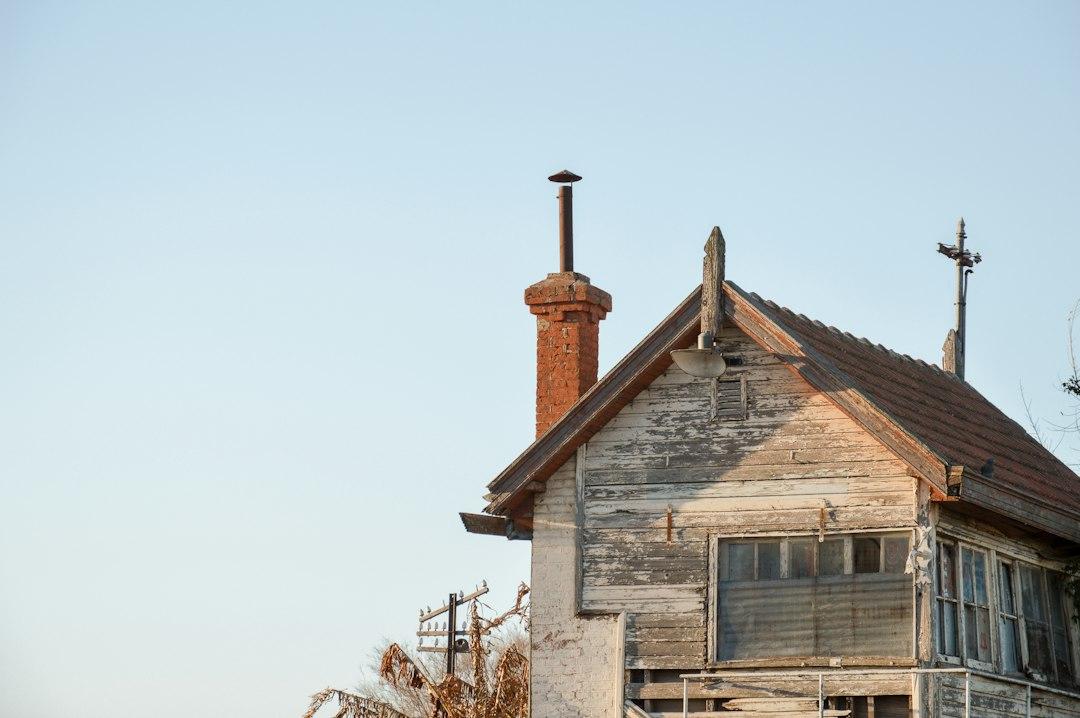
After the first real storm of a Sherman Oaks winter, we hear the same story from owners of houses with prefab fireplaces: a brown patch on the drywall beside the fireplace, rust on the hearth, or the smell of wet plaster. They assume the chimney has cracked. On a factory-built system there is no brick to crack. The chimney is a wooden chase wrapped around a metal pipe, and water gets in where the chase meets the weather. Finding the right spot is most of the job, and paying for a fix at the wrong spot is the most common way these leaks drag on for years.
Five places water gets into a chase
1. The chase top. The sheet metal pan across the top of the chase is the first suspect on most Valley houses. Original pans were plain galvanized steel, flat, and nailed through the top. They rust, sag into a dish and hold water around the pipe. Our post on rusted chase tops covers this one in depth.
2. The storm collar and cap. Where the pipe passes up through the pan, a collar should shed water outward over the opening. Old sealant dries out and the collar slides down or splits. A cap that does not match the pipe, or one that has blown crooked in a Santa Ana wind, can let rain blow down between the pipe walls.
3. The roof line around the chase. A chase is framed like a small wall sitting on the roof, so it needs the same step flashing and counter flashing any wall-to-roof joint does. Behind a wide chase on a sloped roof, a cricket splits the water before it builds up. When the flashing was short-cut during a reroof, water runs straight into the framing.
4. The chase walls. Stucco cracks at corners and where it meets the roof. Siding gaps open at butt joints and trim. Each one lets wind-driven rain into the sheathing. These leaks often show only during storms that come from one direction.
5. Inside the pipe. Rain that gets into the flue past a damaged cap runs down the inner wall of the pipe onto the damper and the firebox floor. That water rusts the steel of the fireplace itself rather than staining a ceiling.
Reading the clues
- Rust on the firebox floor or damper plate, no stain on the walls: look at the cap, the storm collar and the top of the pipe first.
- A stain on the ceiling or upper wall near the fireplace after every rain: the chase top or the collar is most likely.
- A stain that appears only in wind-driven storms: look at the chase walls and the flashing on the side that faces the storm.
- Water in the attic around the pipe: the roof-to-chase flashing or a cricket that was never built.
- Orange streaks on the outside of the chase: a rusted pan, almost every time.
These patterns point us to where to start. The visit confirms it.
How we trace it
We start on the roof: the cap, the collar, the pan, the chase walls and the flashing where the chase meets the roof. Then we go to the attic, where wet sheathing, rusted nails and water lines on the framing show where water has been travelling. Last comes the room, where we look at the firebox floor, the damper and the wall around the opening. When the signs still disagree, we wet one part of the chase at a time, lowest first, with someone inside watching, and stop when the water shows.
You get photos of where the water enters and of the damage it has done.
What a fix includes and what it costs
On our price list, tracing and fixing a chimney leak is $585 to $3,500. A leak that one new collar and a sealed seam will cure sits at the low end. A leak that needs a new chase top, new flashing along the chase and repair to soaked sheathing sits much higher. Other parts carry their own figures. The cap is quoted on site.
| Fix on a framed chase | Graves price |
|---|---|
| Finding and stopping the leak | $585 to $3,500 |
| Peaked diverter built behind a wide chase | $470 to $1,055 |
| That diverter with every roof-to-chase flashing piece renewed | $705 to $1,750 |
| New listed cap on the pipe | quoted on site |
A new chase top on its own, a damper plate, and panels or framing inside the box are priced in writing once we have measured and found the parts for that model. On a prefab system, any part that touches the pipe or the fireplace must match the maker's listing; we do not swap in a generic cap or patch the firebox with mortar.
Describe where the water shows and when it appears, and we will book a leak visit
Why waiting costs more on a prefab unit
On a brick chimney a slow leak stains brick. On a framed chase it soaks plywood and studs, which rot, and it drips onto a steel firebox, which rusts through. Once a firebox floor has rusted through, the unit cannot be repaired back to its listing, and a small leak has become a fireplace replacement. That is the outcome we try hardest to head off.
Where we work
We trace chase leaks across Sherman Oaks, Burbank, Calabasas and Santa Clarita. Our chimney leak repair page lists what the service covers, and if the leak has already reached the fireplace, fireplace repair explains how we handle the box itself.
The contact page is the place to start: give us the address and when the water appears, and we will plan the visit before the next storm.
Need This Done on Your Fireplace?
Graves orders panels, dampers, caps and chase tops by model, then writes up the scope and price before fitting anything. Crews work out of Sherman Oaks and cover Burbank, Calabasas, Santa Clarita and the cities around them.